Behind The Business Films
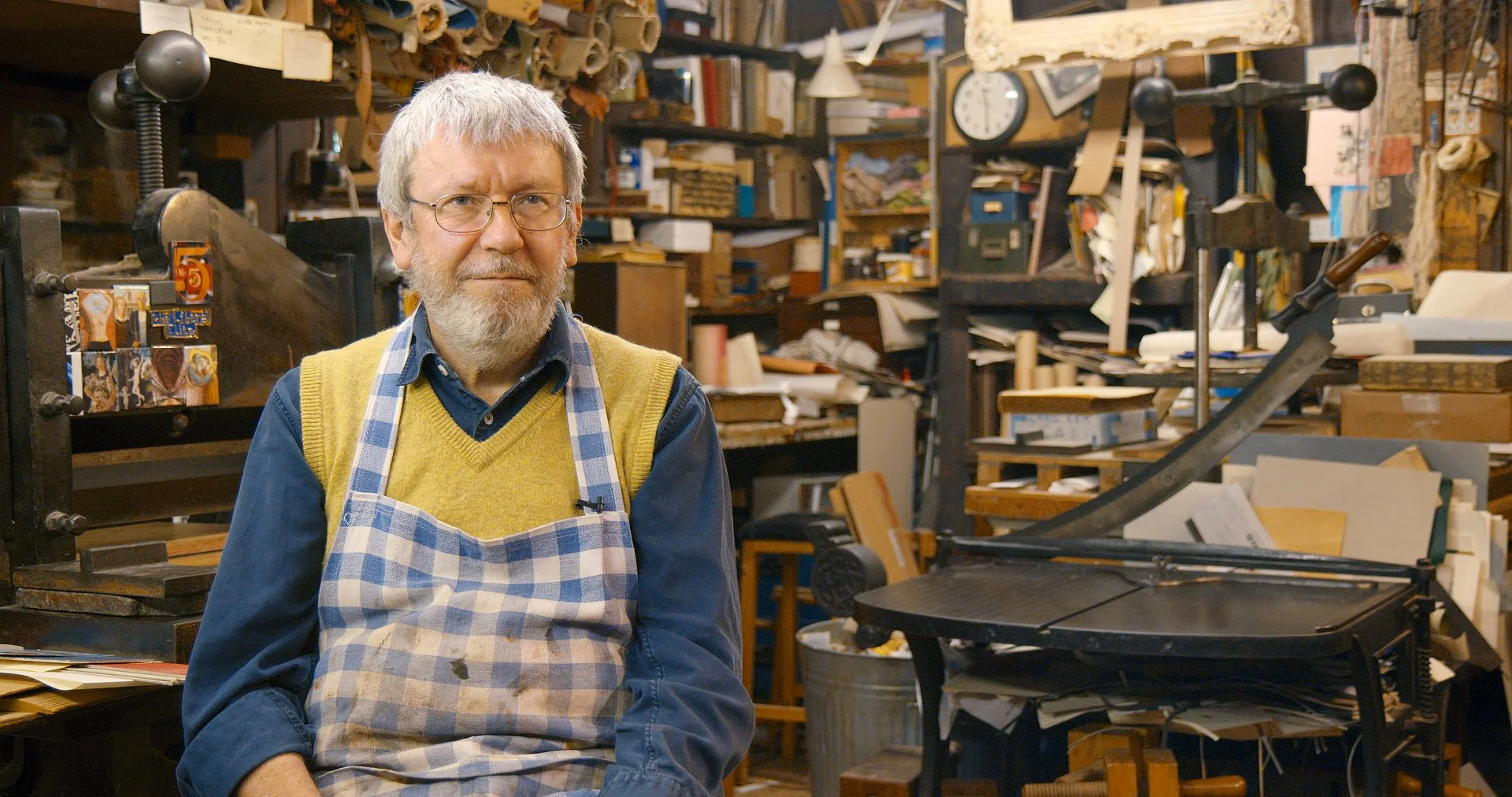
Short documentary films about long lasting businesses in historic Winchester, Hampshire. Done for Heritage Open Days, in these films we discover the Kingsgate Books & Prints shop, Hayward Guitars and The Colour Factory; P&G Wells bookshop and The Winchester Bindery.
Winchester College
Documentary film comisioned by Winchester College to serve as a virtual tour, uncovering hidden locations within the College. Some of these places are only accessible via a guided tour, but most are hidden even to the pupils and teachers.
Rare Books in the School’s Library. Documentary film comisioned by Winchester College to serve as a virtual tour, revealing details about the most historically important books housed by the libraries of the prestigious College.
Cinematic Documentary Production
Some stories need more than a polished promo and more substance than a highlight reel. Cinematic documentary production sits in that space. It is where factual storytelling, strong visual direction and careful editorial thinking come together to create films that feel beautiful, grounded and genuinely worth watching. For brands, institutions, charities, heritage organisations and established businesses, that matters. People do not connect with a mission statement alone. They connect with people, place, craft, process and truth.
At Adrienne Photography, cinematic documentary production is about uncovering the heart of a subject and shaping it into a film with clarity, depth and emotional pull. The result should look refined, but it should never feel staged for the sake of it. It should feel informed, intentional and human. Whether the subject is a historic institution, a long-standing business, a founder with a story to tell, or a team doing meaningful work behind the scenes, the goal is the same: to build trust through intelligent, visually strong factual storytelling.
Beautiful, informed factual storytelling
The best documentary work does not arrive with a camera first. It starts with curiosity. What is genuinely interesting here? What needs context? What details make this story specific instead of generic? What should the audience understand, feel and remember after watching?
That thinking shapes every stage of production. Research and conversation come first, so the film has a clear point of view. Visual style is then built around the subject, rather than imposed on it. Some stories call for calm observation and elegant pacing. Others need more movement, stronger atmosphere or a sharper editorial rhythm. In every case, the production should serve the truth of the subject, not compete with it.
This approach works particularly well for organisations that need more than surface-level content. Colleges, cultural venues, heritage projects, professional services, hospitality businesses, makers, local institutions and premium brands often have richer stories than standard commercial video can comfortably hold. Documentary production gives those stories room to breathe while still delivering a polished, strategic final film that can live on websites, campaign pages, presentations and social platforms.
What a cinematic documentary film can do
A strong documentary film can introduce a place, reveal the people behind an organisation, capture specialist knowledge, preserve heritage, build brand credibility or create a more compelling way into a service or mission. It can function as a flagship brand film, a website centrepiece, a fundraising asset, a campaign anchor or a long-term storytelling piece that continues to add value long after launch.
It is also one of the most effective ways to create trust. Audiences are increasingly good at spotting content that feels thin, over-scripted or overly polished without saying much. Documentary production offers a better route. It shows real environments, real voices and real texture, shaped with enough cinematic care to hold attention and elevate perception. For organisations that want to look credible, thoughtful and culturally aware, that combination is powerful.
Just as importantly, documentary production can be efficient when planned properly. One filming day or a short run of carefully structured shoot days can create a hero documentary, cut-down edits, social snippets, stills and supporting assets that work across multiple channels. That makes it a strong option for marketing teams and communications leads who want substance, longevity and flexibility from a single production.
A calm and editorial production process
The production process needs to feel organised and calm, especially when filming in working environments, historic spaces, public-facing businesses or places where trust matters. Documentary subjects are rarely professional presenters, and that is part of the point. The role of production is to create the conditions for honest, confident contributions without making the process feel performative or intrusive.
Projects usually begin with a discovery conversation about audience, purpose, distribution and story angle. From there, the documentary is structured around interviews, observational footage, location details and supporting visual sequences. Shot planning stays disciplined, but flexible enough to respond to moments that emerge naturally on the day. That balance is where much of the value lies. The film has shape and direction, while still feeling alive and authentic.
Cinematic documentary production also benefits from a strong editorial eye in post-production. This is where the narrative is tightened, visual rhythm is refined, sound and music are balanced, and the final film takes on its full emotional and strategic shape. The difference between footage and a finished documentary is editorial judgement. That is what gives the final piece confidence, coherence and staying power.
Serving Hampshire, Winchester, Southampton and London
Adrienne Photography works across Hampshire and London, with particular relevance for Winchester, Southampton and the wider South. That makes this page a natural fit for organisations looking for documentary film production in Hampshire, Winchester documentary videography, Southampton factual storytelling and cinematic brand documentary production in London. The geography matters because documentary work is often rooted in place. A location is not just a backdrop. It is part of the story.
For Hampshire-based organisations, documentary production can help communicate heritage, community, craft and local relevance with a more elevated visual language. For London-based clients, it can offer a more thoughtful and differentiated alternative to fast, throwaway video content. In both cases, the objective is the same: to create documentary films that feel considered, visually rich and editorially intelligent.
If you are looking for cinematic documentary production that combines commercial polish with genuine factual depth, this is the kind of work worth investing in. It is not content for the sake of content. It is storytelling designed to hold attention, build trust and say something that matters.
Let’s make something worth watching
The strongest documentary films leave people with a clearer understanding of who you are, what you do and why it matters. They create atmosphere, but they also create meaning. They look beautiful, but they are built on thought. And that is exactly the point.
If your organisation has a story with depth, history, expertise or human interest, cinematic documentary production can give it the form it deserves. From institutions and heritage projects to independent businesses and premium brands, this kind of filmmaking is about turning real material into something memorable, credible and lasting.
Get in touch if you are planning a documentary film, a factual brand piece or an editorially led short film in Hampshire, Winchester, Southampton or London. The right story, told properly, can do a lot of heavy lifting.
FAQ
What is cinematic documentary production?
Cinematic documentary production is factual filmmaking shaped with a more refined visual and editorial style. It combines real stories, real people and real environments with careful cinematography, sound and post-production.
Who is this type of film for?
It works well for brands, institutions, colleges, heritage organisations, charities, hospitality businesses, founders and established companies that have a genuine story to tell and want something deeper than a standard promo.
How is this different from a promotional video?
A promotional video usually leads with selling points. A documentary film leads with story, context and people. It can still support commercial goals, but it does so through trust, depth and narrative.
Can documentary production still work for commercial clients?
Yes. In many cases it works better because it gives the audience a stronger sense of credibility, craft and substance. It is especially effective for premium brands, place-led businesses and organisations with heritage or expertise.
Do you film interviews as part of the documentary process?
Yes. Interviews are often a central part of documentary production, but they are supported by observational footage, location details and visual storytelling so the final film does not feel static.
Can one documentary shoot create multiple deliverables?
Yes. A single project can often produce a main film, shorter cut-downs, social edits, teaser clips and supporting stills, depending on the brief and production plan.
Do you work across Hampshire and London?
Yes. Documentary projects can be filmed across Hampshire, Winchester, Southampton and London, as well as other locations where the brief makes sense.
How long should a documentary film be?
That depends on the purpose and audience. Some projects work best at two to three minutes, while others need longer form treatment. The right length is shaped by the story and distribution plan.
Can you help shape the story if we do not have it fully defined yet?
Yes. That is part of the process. Documentary production starts with research, discovery and editorial thinking so the story can be clarified before filming begins.
What kinds of subjects work best for documentary-style films?
Places, people, craft, process, heritage, expertise, mission-driven work and behind-the-scenes stories all work particularly well because they carry natural depth and visual interest.